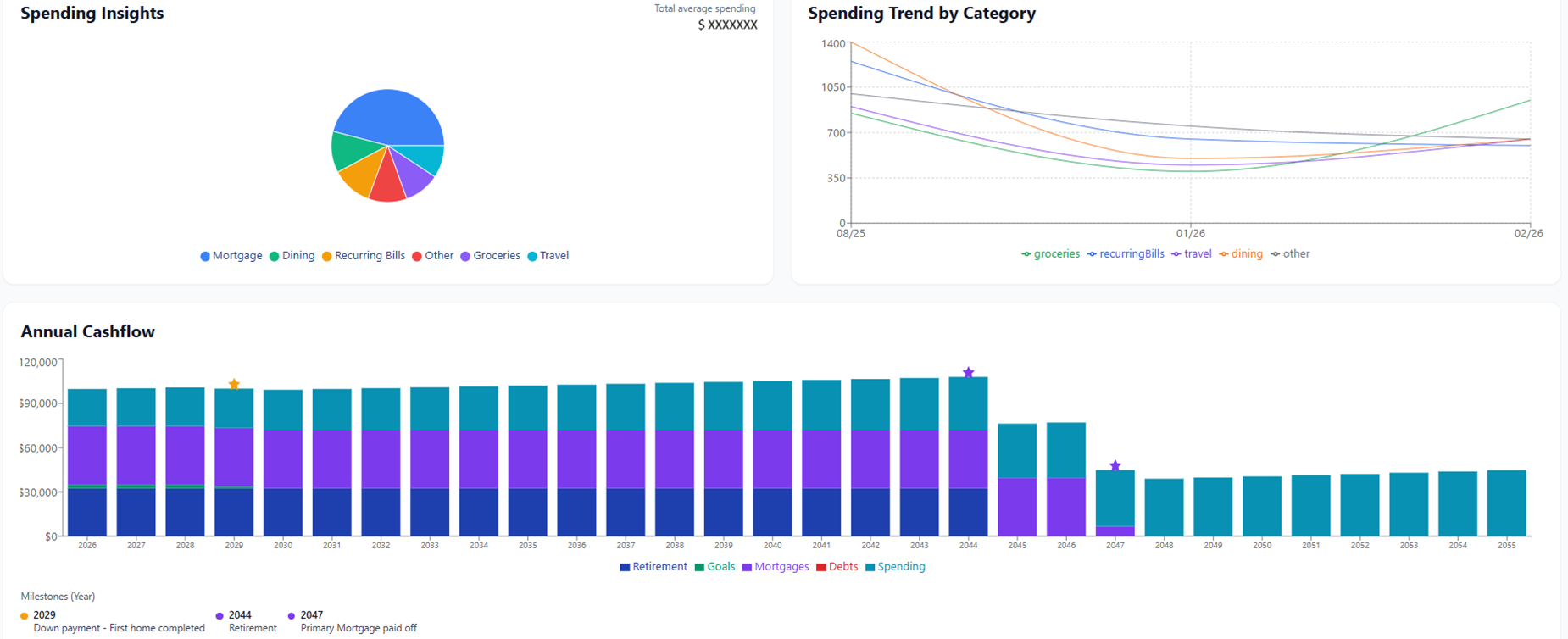
Most budgets fail not because people lack willpower, but because they lack visibility. Here is a practical framework for building one that lasts.
Ask anyone who has tried and abandoned a budget, and the story usually follows the same arc: motivated start, optimistic numbers, a few weeks of tracking, then a quiet retreat back to old habits.
The budget was not the problem. The missing ingredient was a clear, honest picture of where the money was actually going before the plan was made.
Budgeting is not about restriction. Done well, it is a tool for intention - a way to ensure that the way you spend money matches what actually matters to you.
This guide walks through the foundational steps to build a budget that is grounded in reality, easy to maintain, and flexible enough to survive real life.
Step 1: Start with take-home pay, not gross income.
The single most common budgeting mistake is building a plan around gross (pre-tax) income. After income tax, payroll deductions, and benefit contributions, most people take home significantly less than their stated salary - often 25 to 35 percent less depending on their bracket and province.
Step 2: Map three months of real spending.
Before setting a single budget target, spend time understanding your behavior and patterns. Pull at least three months of bank and credit card statements and categorize every transaction.
Most people are surprised by what they find not because they are irresponsible, but because small, frequent purchases accumulate invisibly.
Common patterns include dining and takeout running two to three times what was mentally estimated, multiple overlapping subscriptions that were forgotten or never cancelled, and a large share of monthly spending that cannot be categorized quickly.
Step 3: Choose a framework that fits your life.
The allocation rule: allocate 50-60 percent of take-home pay to needs, 30-20 percent to wants, and 20-10 percent to financial goals such as savings, investing, and debt repayment.
This framework works well in moderate cost-of-living regions, but may require adjustments in high-rent cities where housing can consume 35 to 40 percent of take-home pay.
The pay-yourself-first method: transfer a fixed savings or investment amount the moment income arrives, before discretionary spending begins.
Step 4: Automate the non-negotiables.
The difference between a budget that works and one that does not is usually automation. Any savings, investment, or debt repayment that requires a manual monthly decision is more likely to be skipped.
Set up automatic transfers on pay day so priorities are funded first. This removes decision fatigue and makes spending on the remaining balance feel intentional and guilt-free.