The full Finacify post focused on compound growth, decade-specific guidance, common mistakes, and a five-step action framework for Canadian households.
We open with the compound-growth math that makes the 30s and 40s so critical: small, consistent contributions early produce dramatically different outcomes over decades.
An illustrative bar-chart compares starting at 30 versus 40 and shows how time amplifies terminal value for regular saving.
Why this matters: compound growth is time-sensitive. Each additional year of runway meaningfully increases the end value of repeated contributions.
Your 30s: build the foundation. This decade is about establishing habits that capture tax-advantaged room and consistent saving momentum.
TFSA-first mindset — prioritize tax-free growth and flexibility. If your contribution room is limited, focus on steady TFSA funding using low-cost diversified equity exposure.
Capture employer match immediately — it is effectively free money. Ensure you are contributing enough to receive any matching RRSP or pension contributions offered by your employer.
Automate contributions on payday. Automation removes decision friction and turns intentions into repeatable behaviour without relying on monthly willpower.
Equity-heavy allocation for a long runway. With 20–35 years until retirement, a diversified equity tilt typically offers strong long-term growth potential for most Canadian investors.
Maintain a 3–6 month emergency fund and review life and disability coverage as household responsibilities grow.
Your 40s: accelerate and course-correct. Use higher-earning years to purposefully increase savings and close gaps identified by projections.
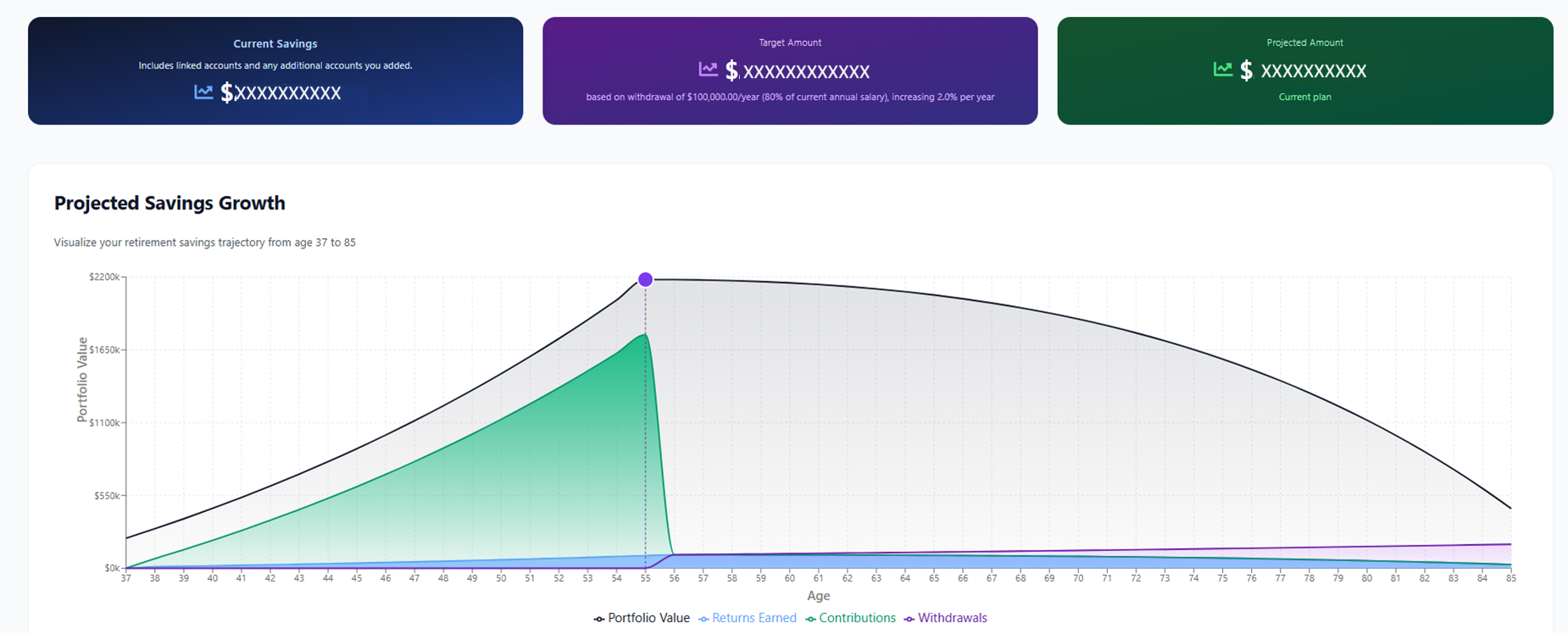
Run a retirement projection and know your number — how much annual income will you need in retirement, and what trajectory are you on today?
Spousal RRSPs and income-splitting strategies can reduce combined tax burden in retirement; consider them when appropriate for your household.
Smith Manoeuvre (where appropriate) — if you have a readvanceable mortgage and the risk profile fits, consider converting mortgage interest into tax-deductible investment interest over time.
CPP deferral planning — deferring CPP increases the benefit; run scenarios to decide whether later collection makes sense for your family.
Common mistakes that cost Canadians the most: market-timing paralysis, spending RRSP refunds instead of reinvesting them, and sitting on too much cash for too long.
Market timing rarely works — consistent dollar-cost averaging into low-cost diversified ETFs typically outperforms attempts to time short-term moves.
Treat RRSP refunds as capital to redeploy into long-term savings or to accelerate mortgage repayment when it makes strategic sense.
Inflation risk is real: cash loses purchasing power over decades, so balance short-term safety with long-term growth for retirement buckets.
A practical five-step priority framework to act on:
Step 1: Capture full employer match (if available).
Step 2: Maximize TFSA contributions with diversified, low-cost equity exposure.
Step 3: Contribute to RRSP in high-income years and reinvest refunds into long-term savings.
Step 4: Consider non-registered tactics (including the Smith Manoeuvre) only after tax-advantaged room and emergency savings are in place.
Step 5: Revisit projections and rebalance annually — adjust contributions as income and circumstances change.
Canadian notes: check TFSA/FHSA/RRSP interactions and your My CRA Account for contribution room; provincial specifics may affect planning decisions.
Call to action: Ready to map your retirement number? The CTA launches an interactive retirement-projection conversation to run a simple scenario for your household.